Showing posts with label Equipments. Show all posts

Discover advantages of Softmouse 3D photogrammetric mouse for mapping

Photogrammetry mouse is completely different from all other mouse, two handed operation in photogrammetric systems make it different from all others. Softmouse 3D photogrammetric mouse is an unparallel option in GIS and mapping applications, strategic military planning, and many other 3D applications where user working in 3D virtual environment. Do you want to know more about Softmouse 3D mouse?


Read more...

NuVision 60GX 3D Glass still best choice for photogrammetric engineers

NuVision 60GX wireless LC glasses build it easier than ever before to incorporate stereoscopic visualization in your arsenal of photogrammetric workstation. Designed for comfort and convenience at an inexpensive worth, a combine of the light-weight glasses will be worn for hours with no eyestrain. They even match over prescription glasses - simply slip them on.
nuvision-3d-glass


Read more...

3D-Metric System 3d laser scanner for accurate and fast 3D Photogrammetry measurements

Shining 3D-Metric system (Photogrammetry System, Digital Photogrammetry) is used for accurate and fast 3D measurements of large/bulky sized object. Consisting of a DSLR CAMERA, coded and un-coded targets, scale bar and measurement software. This system will calculate the coordinates of the object precisely and quickly produce data that can be used for 3D inspection and CAD comparison & deformation analysis. The precise accuracy of the Shining 3D-Metric system for large area 3D measuring and inspection, cover the automotive field, aerospace, shipbuilding industry, architecture, large-scale relic, machinery etc.
3D-Laser-Scanner


Read more...

Camera Calibration report must input for Photogrammetry Software

The radiometric photogrammetry calibration report is based on a series of 60 flat field images for each aperture size and sensor. The flat field is illuminated by eight normal light lamps with known spectral illumination curves.
photogrammetry-software

These images are used in photogrammetry software to calculate the specific sensitivity of each pixel to compensate local as well as global variations in sensitivity. Sensitivity tables are calculated for each sensor and aperture setting, and applied during post processing from level 0 to level 1.


Read more...

Minimize Self-Calibration for accurate photogrammetry software result

Although the photogrammetry equipment the photogrammetric cameras and lenses used in the photogrammetry V-STARS system are of the highest quality, they must still be precisely calibrated to remove errors that are present in the system. Some of these calibration error terms of this photogrammetry equipment can be described in terms of their physical cause while others are more empirically derived. In any case, all of these error terms are automatically solved for by V-STARS along with the XYZ coordinates of the target points and the photogrammetry orientation (position and aiming angles) of each picture in a process called the Bundle Adjustment.
photogrammetry-equipment

This ability to calibrate the photogrammetry equipment the photogrammetric camera as a byproduct of the measurement is called Self-calibration and it means the camera used for photogrammetry will be calibrated at the time of measurement, and under the environmental conditions that exist (temperature, humidity, etc.) at the time of measurement. This is far superior to relying on an old and possibly outdated laboratory calibration that may have been done under dramatically different conditions than existed at the time of measurement.

There are certain requirements that must be met in order to self-calibrate the photogrammetry equipment the photogrammetric camera, but they are usually easy to do. First, the measurement must have what is called roll diversity. This usually means you must take some photographs with the camera horizontal and some photographs with the camera vertical.

Although you will get better photogrammetry results if you take about half of your shots one way and half the other, this is not critical. What is critical is that you must have at least one picture that is rolled approximately 90° differently than the others. If you do not, you cannot self-calibrate the photogrammetry equipment the photogrammetric camera. Instead, you will have to rely on a pre-existing calibration that is less reliable and less accurate.

A second requirement for using self-calibrate the main photogrammetry equipment the photogrammetric camera is that you must measure a minimum number of photographs taken from a minimum number of different locations. You should measure at least six photographs if the object is two-dimensional (the object is essentially flat) or four photographs if the object is threedimensional.

Also, the photographs should be taken from at least three different locations. Since most jobs will take at least this many photographs there is usually no reason not to self-calibrate the photogrammetry equipment the photogrammetric camera. In fact, we strongly recommend that you always take enough photographs to self-calibrate the camera because it is so quick and easy to take and measure extra photographs. A final photogrammetric requirement is that you must have a minimum number of welldistributed points on each photograph and for the entire measurement.

Specifically, you should have at least twelve well-distributed points on each photograph, and at least twenty points for the entire measurement. Well-distributed means the points are distributed fairly evenly throughout the photograph captured by photogrammetry equipment camera. It is much better for example to have twelve points distributed evenly throughout the picture than to have fifty clustered together in one small area. If you do not happen to need this many points for the measurement or they are not well distributed, we recommend you add points to the measurement. As you will see, it is very quick and easy to add extra points to the measurement so feel free to do so.


Read more...

Photogrammetric Camera Exposure makes the targets easier to find and measure

For photogrammetry purposes, it is desirable to set the targets bright and the background dim. When retro-reflective targeting is used, the target and background exposures are almost completely independent of each other. The target exposure of Photogrammetric Camera is completely determined by the flash power while the background exposure is determined by the ambient illumination. The amount of background exposure is controlled by the shutter time. Eliminating the background exposure makes the targets easier to find and measure. However, if there is no background image whatsoever, trying to figure out which target for photogrammetry is which can be difficult. Usually, a compromise is reached and the background exposure is set so the object is dim enough to not interfere with target measurement, but still bright enough that it can be seen when enhanced.
Photogrammetric Camera

Background Exposure of Photogrammetric Camera
The shutter time is used to control the background exposure. When the Photogrammetric Camera is off-line, the shutter time is selected using the mode switches that are located on the top of the camera next to the display. The available shutter times on an INCA2 range from 8 milliseconds to 8 seconds.

The INCA2 Photogrammetric Camera has an AUTO Exposure feature that can be used to automatically set the shutter speed. The default setting is to use the AUTO Exposure. If AUTO Exposure is selected, the shutter exposure is set automatically the first time you take a picture on a job.

Target Exposure Photogrammetric Camera
The flash power setting for the target exposure depends on the distance from the Photogrammetric Camera to the targets, and the target size. The following diagram gives recommended flash power settings at varying distances. If you are shooting the object in sections, use the size of the sections. The tables assume the recommended target size (which is also listed) is used. If the targets are smaller than this, you may want to increase the flash power setting one step to help compensate. The tables assume the default lens f-number of F11 is used with an INCA. It is important to check the lens and make sure it is set to f11, the default setting for the lens.


Read more...

A comprehensive discussion over various aerial cameras

The various types of aerial cameras used in taking photographs is quite different than the ordinary camera as in case of aerial camera. 

aerial camera


Various types of aerial camears:

Single lens camera: A single-lens reflex (SLR) camera is a camera that uses a semi-automatic moving mirror system which permits the photographer to sometimes see exactly what will be captured by the film or digital imaging system, as opposed to pre-SLR cameras where the view through the viewfinder could be significantly different from what was captured on film.

Multi lens camera: The multi-lens camera is a unique piece of technology that follows the principles of lomography for capturing still images. Lomography encourages a light-hearted approach to photography and encompasses over-saturated colors in the images, blurring, and alternative film processing techniques.
Strip Camera:

Panoramic Camera:
Digital Cameras:
 The use of digital cameras is slowly increasing in popularity, paralleling the popularity of digital cameras in the general public.

The CCD (charged coupled device) is the electronic component on which the light from the lens is focused.
 Digital pictures are made up of tiny "squares", each of a single color, called pixels. Each CCD has a maximum number of pixels that it uses to generate the image.
 Camera specifications will list the Max Resolution and the Minimum Resolution.

Some of the cameras used in aerial photography are:

-Zeiss RMK 15/23(digital camera)

23*23 cms picture format,6 inch focal length
-2fairchild kc-6A
23*23 cms picture format,6 inch focal length
Wild RC-10
 (having different focal  lengths;89,152,210,305 mm)
Hasselblad MK-70
Itek LfC (large format camera )


Read more...

Photogrammetry Equipments Various Types of Camera for Aerial Photogrammetry

Here you will find detailed discussion over photogrammetry equipments various types of cameras. There is two type of cameras are available Metric and Non Matric aerial photogrammetry camera.

Metric Camera for Aerial Photogrammetry


Metric cameras are those manufactured specially for photogrammetric applications.

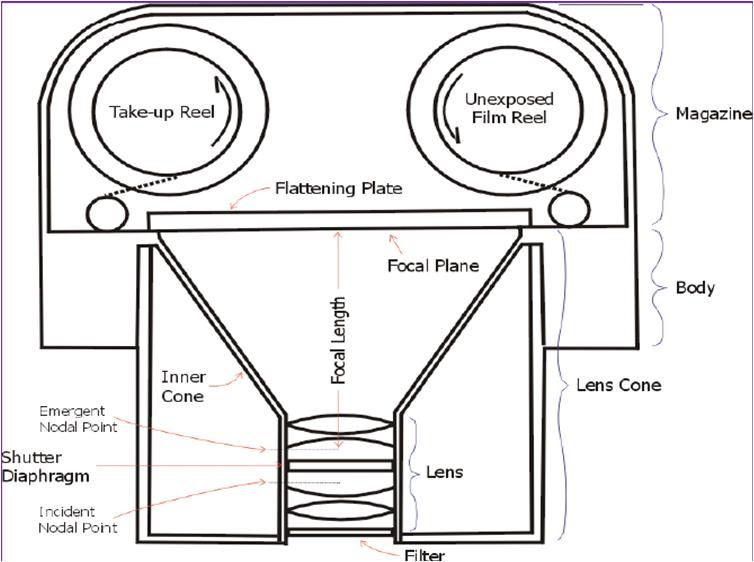
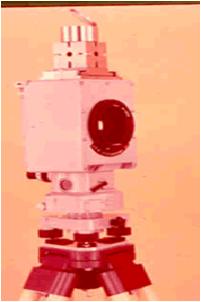
The elements of interior orientation are known :the focal length and location of the centre of the photograph.The metric cameras are further classified as single and stereometric cameras.A single metric camera is mounted on a tripod whereas a stereometric camera consists of two identical metric cameras mounted rigidly at the ends of a fixed base for photograph.

Non Metric Camera for Aerial Photogrammetry


A non-metric camera is characterized by the off-the-shelf cameras which are often used for conventional photography.These are not the cameras especially made for the photogrammetric purposes. In these types of cameras, the elements of interior orientation are unknown or partially available

Digital close range Photogrammetry (DCRP)

 It is the latest development in Photogrammetry, which is especially used to obtain 3D spatial information about objects placed near the camera.


Read more...

Comprehensive discussion of the major Photogrammetry equipments 3D Mouse

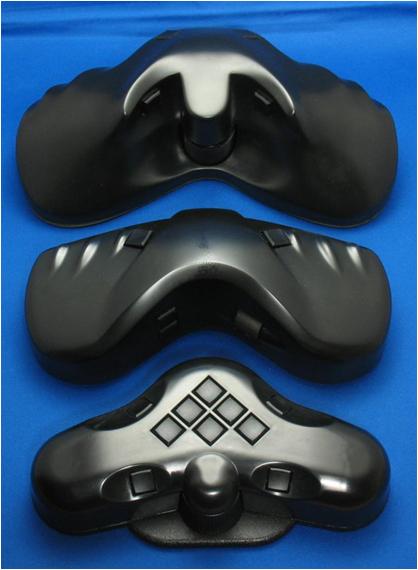
3d mouse is the one of the essential photogrammetry equipments for photogrammetry work station. A wide range of 3d mouses are available in photogrammetry equipments market. Three types of major 3d mouse are used for stereo feature extraction.

-Stealth mouse
-Tope mouse
-Immersion mouse


     Major photogrammetry equipments the Immersion and Stealth E-Mouse are free-hand devices for moving the cursor in the XYZ directions.

Photogrammetry Equipments Stealth Mouse:
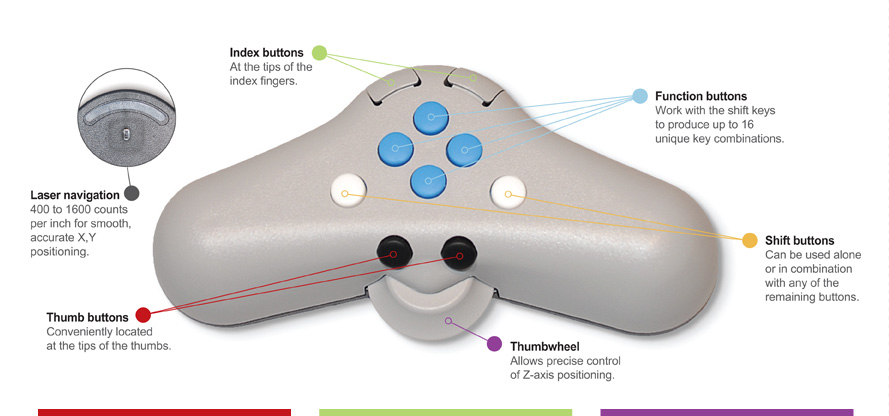
    Stealth3dmouse was designed by ABC Software Developers, and resembles pointing devices used with analytical stereo plotters. The Stealth E-mouse features two data buttons on the back, six programmable buttons on the front for control of software functions, two data buttons on the top, and a centrally located Z thumb wheel.


The buttons are long life switches, made in Switzerland. The rated life is about 5 million cycles. If a button stops working, the mouse will have to be sent in for repair. In the diagram above, Buttons 1, 2, and 4 relate to the standard mouse left, right, and middle mouse buttons.

Buttons SL and SR relate to the Microsoft X1 and X2 application buttons, and are normally programmed to provide a shift function. The buttons 3, 5, 6, and 7 may produce special functions depending on the programming of your applications.

Photogrammetry Equipment -Leica Topo Mouse

Leica Topo Mouse is an advanced, ergonomic free-hand device for moving the cursor in the XYZ directions on digital photogrammetric workstations, and for carrying out frequent photogrammetric operations rapidly and efficiently. Topo Mouse is the tool for maximum productivity in time-consuming, routine tasks such as feature collection and DTM editing.

The Topo Mouse button and switch design is built to sustain millions of presses. All buttons and switches are software programmable and can be allocated to operations according to user preference.

 They can also be assigned to control clutching, shifting, sensitivity, and automatic slewing. Multiple sets of button and switch configurations can be stored to suit different operators, projects or software applications.

 Software products from Leica Geosystems such as Leica Photogrammetric Suite®, ORIMA, PRO600 and Stereo Analyst® for ArcGIS include functionality to use the Topo Mouse flexibly; successful operation with third party software products is straightforward as well.
Benefits
• High productivity • Low cost • Ergonomic design
• Convenient for commonly executed Photogrammetry functions • Fewer mistakes on routine tasks • Controls up to 30 operations

Topo Mouse
Immersion Mouse
Troubleshooting

If the photogrammetry equipments 3d mouse stops working check the following:
If the mouse does not work at all, make sure it is plugged into the computer, that the computer is working properly, and that there is a red light at the underside of the mouse.
If the Z-wheel does not work, run any application program that normally recognizes the scroll wheel on a normal mouse, and see if the Z-wheel scrolls the application. If it does, then the mouse z-wheel is working properly.
If a button does not work, try another button to make sure the mouse is working.
If the mouse skips when moving, try a different surface. The mouse does not work well on certain surfaces, especially polished or reflective ones.
If the buttons work, but do not act properly, contact your software vender for help.


Read more...

Photogrammetry equipments Stereo capable graphic card for 3d capturing

Photogrammetry equipments Graphic card is used for 3D visualization.  3DLABS Semiconductor and New Vision are vendors of Photogrammetry equipments Graphic cards. 3D LABS Semiconductor is a company that develops the DMS range of fully programmable media-rich application processors targeted at the handheld and embedded markets.
Photogrammetry equipments Graphics cards with stereo connectors:
- NVidia: Quadro FX (Macs must have a Quadro FX 4500).
- ATI: Fire GL


Read more...

Photogrammetry equipments Infrared Emitter for 3d view

 An IR emitter which is a key photogrammetry equipment and is sold with wireless 3-D shutter glasses and essentially provides a method of transmitting the 3-D sync signal to the glasses by sending out an infra-red signal. The Photogrammetry eqipments IR emitter should be connected to the VESA compliant 3D Sync Out port on the side of the TV.


Read more...

How 3d effect works with photogrammetry equipment stereo glasses

The easiest way to create depth perception in the brain is to provide to the eyes of the viewer two different images, representing two perspectives of the same object, with a minor deviation similar to the perspectives that both eyes naturally receive in binocular vision. Photogrammetry equipment 3d glasses are used for creating a 3d illusion from a pair of 2d-images.
nuvision3dglass
Photogrammetry equipment LCD shutter glasses are glasses used in conjunction with a display screen to create the illusion of a three dimensional image, an example of stereoscopy. Photogrammetry equipment Glass containing liquid crystal and a polarizing filter have the property that it becomes dark when voltage is applied, but otherwise is transparent. The glasses are controlled by an IR, RF, DLP-Link or Bluetooth transmitter that sends timing signal. The Glasses alternately darken over one eye, and then the other, in synchronization with the refresh rate of the screen, while the display alternately displays different perspectives for each eye, using a technique called Alternate-frame sequencing.

Our ability to see stereo-vision comes from each of our eyes seeing a slightly different view of the world. Our brain integrates these two images into one three-dimensional picture. Photogrammetry equipment, the key element in producing the stereoscopic depth effect is parallax. Parallax is the horizontal distance between corresponding left and right image points. The stereoscopic image is composed of two images generated from two related perspective viewpoints, and the viewpoints are responsible for the parallax content of a view.

Photogrammetry equipment Electro-stereoscopic displays provide parallax information to the eye by using a method related to that employed in the stereoscope. The 3D display systems normally in use on of the following methods:

Photogrammetry equipment stereo glasses -
-Separate display for each eye (used in HMDs)
-Shutter glasses (most common method)
-Color filter glasses (used in some old 3D movies)
-Polarizing glasses (used in some modern 3D movies)


Read more...

Laser Scanners Directory to simplify your searching

This is very difficult to decide a right Leaser Scanner. A wide range of Laser scanners are available in market. But this is also difficult to find all laser scanners link. Here you find almost all market leaders. This Laser Scanners directory will simplify your laser scanner searching. 
3D Digital (now own rights to RealScan 3D... which was previously owned by Intel, and before that Lockheed Martin). The Model 100 portable scanner has a USB interface for easy interfacing but no color texture. The Model 200 has color texture. 
3D Scanner has two different products. ModelMaker is a hand-held line scanner that fits on the end of an articulated arm (such as Faro). It comes in several different sensor configurations. The user can choose where to spend more time gathering dense data. The weight of the head and the rigidness of the articulated arm can make scanning a bit tiring. Replica/Reversa is a complete Computer Numerically Controlled (CNC) Machine. 
3Shape 3D scanners for hearing aid and footwear applications 
DataPixel has sensors for CMMs, robot based inspection, and manufacturing in-line inspection. 
Axila G-scan is an integrated articulated arm and laser line scanner. 
Canadian National Research Council 
C-Map Systems LazrLyne projects a bright red vertical stripe into the video camera field of view. This allows an operator to measure areas, distances, and angles on the screen. The device is typically used for remote controlled crawlers, undersea ROV's, borescopes, and video microscopes. 
Cyberware pioneered laser and video-based scanning technology. Their head and body scanners have been heavily used in the movie industry. The have scanners to address a full range of applications and they build custom scanners for special applications. The scanners color texture inaddition to geometry data. 
DCS incubator project uses projection of multiple laser lines to create 3D profiles. 
Diff Scan handheld 3D scanner uses a laser, camera, and diffraction to obtain range information 
Digibotics has several different size models that use a single laser dot to scan an entire object. The systems automatically scan an entire object in an intelligent fashion. Because of the order it scans the object, the point cloud is very easy to convert to a NURB model usings tools like Surfacer. The scanning is some what slow, but accurate. 
Hamar laser alignment systems 
Hymarc Hyscan 45C laser digitizer is designed to fit to any Coordinate Measuring Machine (CMM), Computer Numerically Controlled (CNC) Machine, or other translation device. 
Industrial Technology Research Institute has a 4-axis scanner, a portable 3D scanner, and a body scanner. 
4DI (bought by Brooks Automation) system projects multiple laser lines to scan an object. It has two video cameras to calculate the 3D points and one camera to keep track of the multiple lines. 
INO has a line of high speed 3D laser profiling sensors 
IVP high speed 3D machine vision sensor calculates range information directly in the camera (10,000 profiles / sec). Combined with the Ranger software, it makes creating 3D profiling applications easy. 
Kreon3D has two different models. The laser line is projected from the center of the sensor. Two cameras are used on either side of the line projector. This allows data capture even if one of the cameras is obscured. 
Laser Design makes both portable and CMM based scanners for large and small applications. 
LMI Technologies Inc. has single point, multi-point, single-line and multi-line laser sensors 
Mensi offers two different models, one for long distances (2.5 - 25 Meters), and one for shorter distances (0.8 - 10 meters). 
Metris has several CMM non-contact scanners. 
Metron Systems MSG2 3D Scanning System is for reverse engineering, rapid prototyping, first article inspection, quality and process control or simply scanning services 
Konica Minolta Vivid (USA) (Europe) (Japan) has three models (Vivid 330, 700, 900) to provide different accuracies and working volumes. These systems operate like a conventional camera and are portable, fast, and reliable. The systems product color texture and geometry data. 
Nagoya Institute of Technology Handy 3-D Cam 
Nextec has the Wiz laser point probe that can be mounted on a CMM or they have the Hawk integrated scanning system 
New Features Measurement sells the M2D line of laser line scanner 
NextEngine Desktop 3D Scanner uses multi-stripe laser triangulation and sells for around $2500. 
OGIScanner laser line scanner for measuring rough diamonds for use in diamond planning and cutting. 
Origin Technology captures a two-dimensional digital profile of a surface. 
Perceptron provides laser line scanner and software for integrating with articulated arms 
Polhemus has come out with a new model of the FastScan handheld laser scanner. The FastScan Cobra is a single camera laser line scanner. It is much lighter and easier to handle than the original FastScan. The user "paints" the object of interest. The point cloud is displayed on the screen as the scan is being done. It uses a built-in magnetic tracker to obtain the position and orientation of the scanner. This puts the scanned points in the same coordinate system. The overlapping scans are processed into a single surface model. Optional software provides automatic hole filling and generates water tight meshes. The list price is around $20K and the accuracy is around 0.5mm. This product is not suited for working around metal because of the tracker. The scanner and FastRBF software are developed by Applied Research Associates NZ Ltd. and FarField Technology 
Roland Model LPX-250 Laser Scanner is a $10K laser dot scanner that has rotation and linear stages. The operating volume is 10" diameter, 16" height. The scanning resolution can be as small as 0.008". The unit is very nicely package, but large complex parts can take quite a bit of time to scan. 
Scantech produces 3D laser scanners and CAD/CAM for efficient and fast copy milling. They have a portable scanner and stationary 3D laser scanners for mounting on any CNC-controlled milling machine or CNC-turning lathe. 
ScanWorks from Perceptron can be mounted on an articulated arm 
Shapegrabber has tabletop, portable, and gantry scanning platforms. 
Steinbichler Comet T-scan hand-held laser scanner for 3D-digitizing of freeform surfaces 
Scantech portable or CNC mounted scanner for stone, wood, and metal industry 
Surphaser 3D Laser Scanner ($30k) scans 200,000/sec with an operating volume of 6' x 6' x 6' with 0.05mm RMS accuracy 
Wolf & Beck Optical Scanning sensors for CMMs 
Z+F UK Ltd LARA scanners and Light Form Modeller Software 


You can add others ....


Read more...